


TL;DR:
- Luxury brand names are defined by exclusivity, deep heritage, and a consistent governing philosophy across all touchpoints. These brands build prestige through limited access, historical craftsmanship, and deliberate naming choices that reflect their core values, such as founder surnames or philosophical concepts. Quiet luxury and stealth wealth emphasize restraint, high-quality materials, and intrinsic value over visible branding, becoming a strategic shift in affluent consumer communication.
Rich brand names in the luxury sector are defined by exclusivity, deep heritage, and a singular philosophy that governs every brand touchpoint. Chanel, Hermès, and Louis Vuitton are not just names. They are shorthand codes for entire belief systems that affluent consumers aspire to belong to. Brand heritage drives a 25% boost in prestige perception among affluent consumers. For brand strategists working in luxury, understanding what separates these names from premium competitors is the foundation of every positioning decision.
What makes rich brand names different from premium brands
The industry term for what most marketers call “rich brand names” is luxury brand identity. The distinction matters because it changes how you build, protect, and communicate a brand. True luxury brands distinguish themselves through exclusivity in distribution, limited production, and deep heritage. Premium brands like Coach or Michael Kors compete on a “more for more” value equation. Luxury brands like Chanel and Hermès reject that equation entirely.
Three structural criteria separate luxury brand identities from premium ones:
- Exclusivity in access. Restricted retail access reinforces perceived desirability among high-net-worth individuals. Hermès does not sell its Birkin bag on demand. You earn the right to purchase it.
- Heritage depth. A brand with 100-plus years of documented craft history carries weight no marketing budget can replicate. Louis Vuitton’s trunk-making origins from 1854 are not a footnote. They are the brand’s core argument.
- Integrated philosophy. The most luxurious brand identities govern every element through a singular belief system. Loro Piana’s philosophy is material excellence. Louis XIII’s philosophy is time. Every product, retail space, and communication reflects that belief.
Pro Tip: When auditing a luxury brand’s positioning, ask one question: can you state the brand’s governing philosophy in a single sentence? If you cannot, the brand is operating as premium, not luxury.
Top 10 rich brand names that define affluent branding
“Luxury brands no longer rely on traditional advertising. They have cultural authority that compels consumers to seek their iconic names.” — Top luxury fashion houses define modern fashion culture, unlike fast-fashion retailers that replicate trends at scale.
The following ten brands represent the clearest examples of high-end brand names that have built impactful affluent brand identities. Each one demonstrates a distinct approach to exclusivity, heritage, and philosophy.
1. chanel
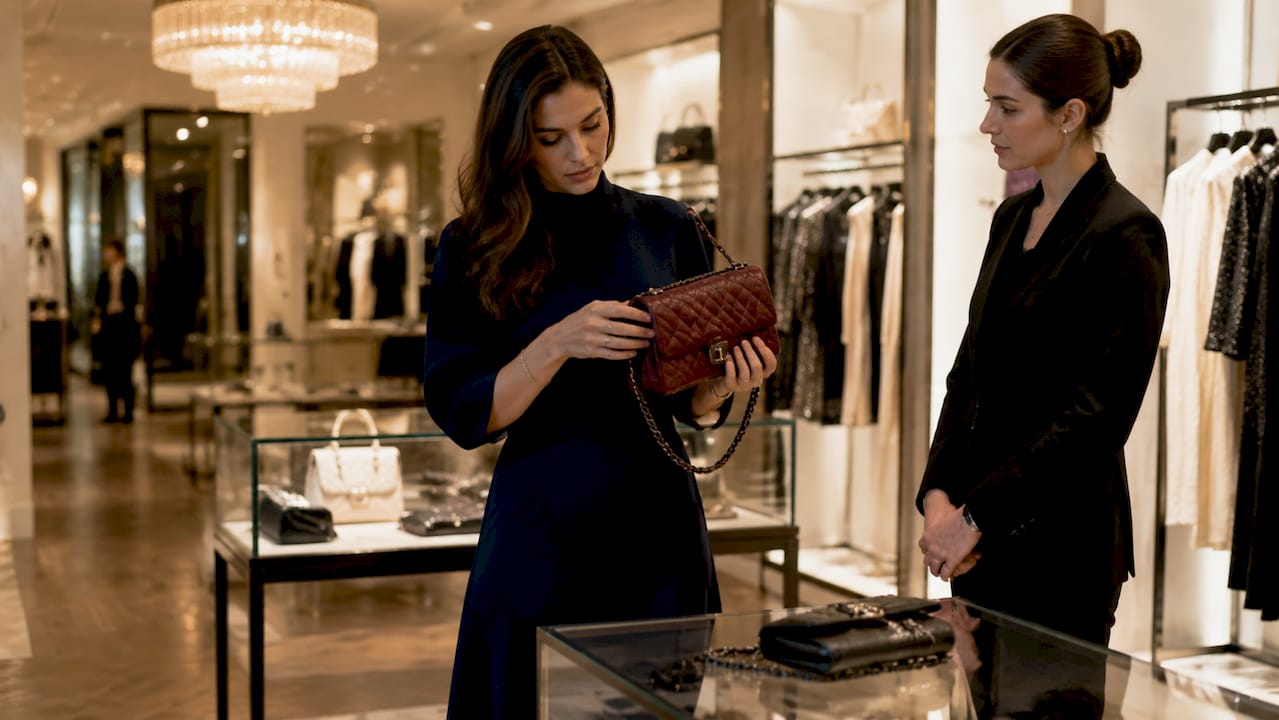
Chanel is the clearest example of a brand built around a founder’s personal philosophy translated into a permanent aesthetic code. Gabrielle Chanel’s belief that women deserved freedom of movement produced the little black dress, jersey fabric in couture, and the No. 5 fragrance. The interlocking CC logo is one of the most recognized marks in luxury, yet Chanel has never listed publicly. That refusal to commoditize ownership is itself a statement of exclusivity.
2. hermès
Hermès is the gold standard for scarcity-driven desirability in luxury brand names. Founded in 1837 as a harness maker, the brand’s equestrian origins still appear in its orange boxes, silk scarves, and the Kelly bag’s saddle-stitching technique. Every Birkin is handmade by a single artisan. That production constraint is not a limitation. It is the brand’s most powerful marketing tool.
3. louis vuitton
Louis Vuitton is the world’s most valuable luxury brand by brand value, and its LV monogram is the most counterfeited logo in fashion history. That paradox reveals something important: the name carries so much cultural weight that it attracts both aspiration and imitation. The brand’s consistent philosophy across touchpoints from product quality to retail environment keeps its perception anchored in prestige despite mass recognition.
4. bottega veneta
Bottega Veneta built its identity on the deliberate absence of visible branding. The brand’s founding motto, “When your own initials are enough,” is one of the most confident positioning statements in luxury history. Its intrecciato weave technique functions as a logo without being one. Consumers who recognize it signal membership in an informed inner circle. This is the purest form of exclusive brand naming in practice.
5. loro piana
Loro Piana’s governing philosophy is material excellence, and that belief turns product quality into brand identity rather than a marketing message. The brand uses vicuña fiber and baby cashmere, two of the rarest textiles on earth. Its branding is deliberately understated. No logo dominates its garments. The material itself communicates status to those who know what they are touching.
6. louis XIII cognac
Louis XIII is one of the most philosophically coherent luxury brand names in any category. The brand organizes its entire identity around time. Each decanter contains cognac aged up to 100 years, meaning the cellar master who begins a blend will never taste the finished product. That intergenerational commitment is not a product feature. It is the brand’s entire argument for why it belongs in the luxury tier.
7. brunello cucinelli
Brunello Cucinelli built a wealthy brand concept around humanistic capitalism, a philosophy that connects product quality to ethical production and the dignity of craftspeople. The brand’s headquarters in Solomeo, a restored medieval hamlet in Umbria, is not a headquarters. It is a physical manifestation of the brand’s belief system. Affluent consumers pay for cashmere, but they buy into a worldview.
8. the row
The Row, founded by Mary-Kate and Ashley Olsen in 2006, is the defining example of quiet luxury in contemporary fashion. The name itself is a reference to Savile Row, London’s tailoring district, signaling craft and restraint without announcement. There are no logos. There are no seasonal spectacles. The brand communicates through fabric weight, cut precision, and the deliberate absence of noise. It is one of the most studied affluent brand identities among brand strategists today.
9. chaumet
Chaumet is a Parisian jeweler founded in 1780 with a client list that included Napoleon Bonaparte. That historical connection is not incidental. It is the brand’s primary heritage asset. Chaumet’s tiaras and high jewelry pieces carry the weight of French imperial history. The brand’s name functions as a certificate of provenance. For strategists studying how brand desirability is constructed over centuries, Chaumet is a masterclass.
10. max mara
Max Mara occupies a precise position in the luxury spectrum: accessible enough to be aspirational, exclusive enough to signal taste. The brand’s camel coat is one of the most copied garments in fashion, yet the original remains the reference point. Max Mara’s naming philosophy is clean and modern, avoiding the founder-name convention that dominates French luxury. That choice signals confidence. The brand does not need a famous surname to anchor its authority.
How quiet luxury and stealth wealth shape affluent brand identities
“Quiet luxury” is the industry term for a branding approach where subtlety and intrinsic quality replace visible logos as the primary signal of status. “Stealth wealth” describes the consumer behavior that drives demand for these brands. Quiet luxury brands cater to customers who value high-quality materials and restraint over conspicuous branding. This is not a trend. It is a structural shift in how a growing segment of affluent consumers communicate identity.
The brands that define this space share specific characteristics:
- Minimal or absent logos. The Row, Loro Piana, and Brunello Cucinelli carry no visible branding on most garments.
- Material as message. Fabric quality, construction technique, and fit communicate status to informed buyers.
- The IYKYK effect. “If You Know, You Know” is the social currency these brands trade in. Recognition is reserved for insiders.
- Pricing without justification. These brands do not explain their prices. The price itself is a filter.
The strategic implication for brand strategists is direct. Building a quiet luxury identity requires discipline. You must resist the impulse to explain, advertise, or justify. The brand’s silence is its loudest signal.
Pro Tip: Audit your brand’s communication for over-explanation. If your brand is telling consumers why it is luxurious, it is not yet operating as a luxury brand. Luxury brands assume the consumer already knows.
Comparing rich brand names: exclusivity, heritage, and philosophy
The table below maps ten top luxury brands across the criteria that define impactful affluent brand identities. Use it as a strategic reference when analyzing positioning gaps or building a new luxury brand architecture.
| Marque | Exclusivity Level | Heritage Depth | Naming Philosophy | Logo Prominence | Core Philosophy |
|---|---|---|---|---|---|
| Hermès | Extreme | 180+ years | Founder surname | Subtle | Artisan scarcity |
| Chanel | Very high | 100+ years | Founder surname | Moderate | Female liberation |
| Louis Vuitton | High | 170+ years | Founder surname | High | Travel craftsmanship |
| Bottega Veneta | Very high | 55+ years | Place of origin | None | Craft over logo |
| Loro Piana | Extreme | 200+ years | Founder surname | Minimal | Material excellence |
| The Row | High | 20 years | Craft district reference | None | Restrained precision |
| Brunello Cucinelli | Very high | 45+ years | Founder surname | Minimal | Humanistic production |
| Louis XIII | Extreme | 140+ years | Historical figure | Moderate | Time and legacy |
| Chaumet | Very high | 245+ years | Founder surname | Moderate | Imperial provenance |
| Max Mara | High | 70+ years | Abstract modern name | Minimal | Accessible authority |
The pattern is clear. The most exclusive brand names in this group either use founder surnames to anchor heritage or make a deliberate naming choice that signals a specific philosophy. No top luxury brand uses generic descriptors. Every name is a proper noun with a story attached.
Key takeaways
Rich brand names in luxury are defined by exclusivity, heritage, and a governing philosophy that remains consistent across every brand expression.
| Point | Details |
|---|---|
| Philosophy over aesthetics | Every top luxury brand name is anchored in a singular belief system, not just visual design. |
| Exclusivity is structural | Limited production and restricted distribution are strategic tools, not supply constraints. |
| Heritage is a competitive asset | Brands with 100-plus years of documented history carry prestige no campaign can manufacture. |
| Quiet luxury is growing | The Row, Loro Piana, and Brunello Cucinelli prove that logo-free branding commands premium prices. |
| Naming signals positioning | Whether founder surname or craft reference, every luxury brand name carries a deliberate philosophical argument. |
The uncomfortable truth about luxury brand names
Working with luxury brands across fashion, lifestyle, and high-end retail has shown me one pattern that most brand strategy frameworks miss. The name itself is almost never the problem. The problem is the gap between what the name promises and what the brand actually delivers at every touchpoint.
I have seen brands with genuinely beautiful names, strong heritage stories, and real craft credentials underperform because their retail environment contradicts their positioning, or their digital communication sounds like every other brand in the category. Consistency across all touchpoints is what makes a name synonymous with aspirational values. Without that consistency, the name is just a word.
The brands in this list, from Hermès to The Row, share one discipline that most emerging luxury brands lack. They say no more than they say yes. They refuse collaborations, distribution channels, and communication formats that do not serve the philosophy. That refusal is the brand strategy. The name earns its weight through what the brand declines, not just what it produces.
My advice to brand strategists is this: before you work on the name, audit the philosophy. If you cannot articulate the governing belief in one sentence, the name will never carry the weight you need it to carry.
— Corrado
Build your luxury brand with proven growth tactics
The brands profiled here did not build their prestige by accident. They applied specific strategies around exclusivity, heritage communication, and philosophy-driven positioning. Corradomanenti translates those same principles into practical growth frameworks for fashion and luxury brands at every stage.
If you are ready to position your brand with the precision these names represent, Corradomanenti’s luxury brand growth tactics give you a structured path from brand audit to market positioning. The work starts with your philosophy and builds outward from there. Every element, from naming to retail experience, gets aligned to a single governing idea that affluent consumers will recognize and trust.
FAQ
What are rich brand names in luxury?
Rich brand names are luxury brand identities defined by exclusivity, deep heritage, and a governing philosophy that informs every brand touchpoint. Hermès, Chanel, and Louis Vuitton are the most cited examples.
How do luxury brand names differ from premium ones?
Luxury brands limit production and distribution to reinforce prestige, while premium brands like Coach compete on broader accessibility and value. The distinction is structural, not just perceptual.
What is quiet luxury in brand strategy?
Quiet luxury is a branding approach where high-quality materials and minimal logos replace visible branding as status signals. Brands like The Row and Loro Piana lead this category, targeting affluent consumers who value restraint.
Why does brand heritage matter for luxury positioning?
Heritage drives a 25% boost in prestige perception among affluent consumers. A documented history of craft and legacy creates emotional connection that no campaign can replicate from scratch.
Should a luxury brand use the founder’s name?
Most top luxury brands use founder surnames because the name anchors heritage and signals authenticity. Exceptions like Bottega Veneta and The Row show that craft references or abstract names can work equally well when the philosophy is strong enough to carry the identity.