

TL;DR:
- Brand identity in luxury marketing is a comprehensive system of visual, verbal, and experiential cues that foster emotional connection and trust with consumers. It comprises five interconnected pillars: purpose, visual identity, voice, values, and experience, each reinforcing the others to build long-term loyalty and revenue. Maintaining a strategic, authentic identity over time is essential for luxury brands to sustain relevance, trust, and competitive advantage.
Brand identity is the core set of visual, verbal, and experiential signatures that determine how a brand connects emotionally and cognitively with its audience, making it the single most powerful driver of trust and purchasing behavior in luxury markets. Understanding why identity matters in brand marketing is not a theoretical exercise. It is a revenue question. Consistent brand identity across all touchpoints increases revenue by 23 to 33% on average. Meanwhile, 62% of consumers say a brand’s visual and emotional identity directly influences their purchasing decisions, and 81% require trust before they will buy at all. Brands like Nike, Patagonia, and Colgate have each demonstrated that identity built on purpose and emotional resonance outperforms any campaign built on features alone.
Why identity matters in brand marketing: the five pillars
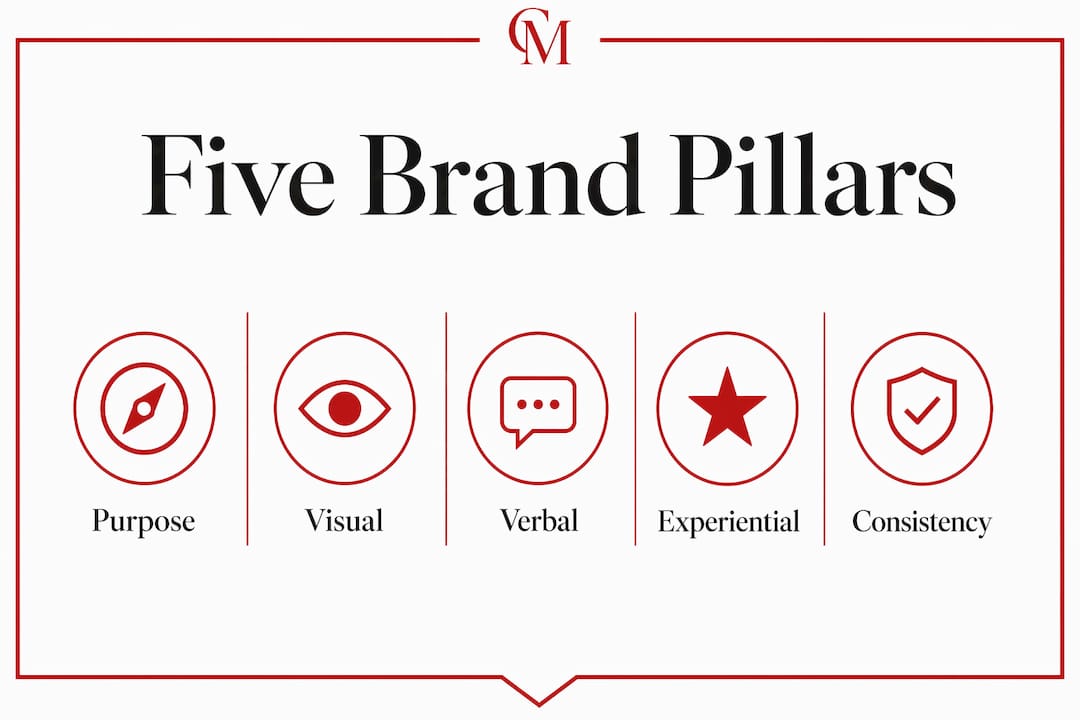
Brand identity is not a logo. It is a living system composed of five interdependent pillars: purpose, visual identity, voice and messaging, values, and experience. Each pillar reinforces the others, and a weakness in any one of them creates inconsistency that erodes consumer trust over time.

Purpose is the foundational “why” that gives a brand its reason to exist beyond profit. Patagonia’s environmental activism is not a marketing add-on. It is the organizing principle that makes every product decision, campaign, and partnership coherent. Without a declared purpose, luxury brands default to product-led messaging, which is the fastest route to commoditization.
Visual identity covers logo, color palette, typography, and imagery. Colors, typography, and storytelling are the critical elements that shape emotional bonds and trust at first contact. In luxury, visual identity carries disproportionate weight because the purchase decision often begins before a single word is read. Hermès orange, Tiffany blue, and Louis Vuitton’s monogram pattern are not design choices. They are proprietary emotional triggers.
Verbal identity defines tone, vocabulary, and the specific way a brand speaks across every channel. A brand that sounds authoritative in its print advertising but casual on Instagram has a fractured identity, regardless of how consistent its logo placement is.
Experiential identity covers every touchpoint where a customer interacts with the brand, from packaging to retail environment to post-purchase communication. This is where luxury brands either validate or undermine the promise their visual and verbal identity makes.
Pro Tip: Map every customer touchpoint against your brand’s stated values. Any touchpoint that cannot be directly linked to at least one core value is a gap in your identity system, not just an operational oversight.
How does brand identity impact consumer perception and revenue?
The business case for strong brand identity in luxury markets is not abstract. 81% of consumers require trust before committing to a purchase, and trust is built through identity consistency, not advertising frequency. A brand that shows up differently across channels forces the consumer to re-evaluate it with every interaction, which is cognitively expensive and emotionally distancing.
“In the age of identity editing, brands must anchor evolution in a consistent narrative to avoid confusion and loss of trust.” — Wharton School of Business
The revenue implications are measurable. Brands with consistent identity systems see improvements in unaided recall, referral rates, sales win rates, and net promoter score within six to twelve months of implementation. These are not soft metrics. They are the leading indicators of long-term brand equity and pricing power, both of which are non-negotiable in luxury positioning.
Colgate’s “Every Smile Has a Story” campaign is a precise example of identity-driven marketing outperforming product-led messaging. By localizing emotional narratives across cultural contexts rather than broadcasting a single global message, Colgate shifted from a functional brand to an emotionally resonant one. The lesson for luxury strategists is direct: emotional storytelling campaigns that reflect cultural authenticity generate trust and distinction that generic advertising cannot replicate.
| Identity element | Business impact |
|---|---|
| Visual consistency | Drives unaided brand recall and premium price tolerance |
| Emotional storytelling | Builds trust and cultural relevance across diverse markets |
| Verbal coherence | Reduces cognitive dissonance and strengthens brand loyalty |
| Experiential alignment | Converts brand promise into measurable NPS and referral growth |
Is brand identity more important than consistency or logo design alone?
Brand identity, brand strategy, and branding are three distinct concepts that luxury professionals frequently conflate, and the confusion is costly. Brand strategy defines where a brand competes and why it wins. Branding is the execution of that strategy through design and communication. Brand identity is the system of cues, both tangible and intangible, that makes a brand recognizable and emotionally meaningful to its audience.
A logo is a single asset within the visual identity pillar. Treating it as the whole of brand identity is the equivalent of treating a front door as the whole of an architectural experience. Luxury consumers do not buy logos. They buy the world a brand constructs around them.
Consistency without authentic identity is equally insufficient. A brand can be consistently mediocre. Consistency amplifies whatever identity already exists, which means a weak or generic identity becomes more visible, not less, when applied consistently. The goal is not to repeat the same visual assets across channels. The goal is to express a coherent, emotionally resonant identity through every channel in a way that feels native to each one.
| Concept | Definition | Limitation when used alone |
|---|---|---|
| Logo | Single visual mark | No emotional or narrative depth |
| Consistency | Repeating the same assets | Amplifies weak identity as readily as strong |
| Brand identity | Full system of visual, verbal, experiential cues | Requires strategic intent to activate |
| Brand strategy | Competitive positioning framework | Inert without identity to express it |
Pro Tip: Before auditing your visual assets, audit your brand’s narrative spine. If you cannot articulate your brand’s core story in two sentences, no amount of design consistency will create the emotional coherence luxury consumers expect.
The consistent narrative spine concept from Wharton is particularly relevant here. In a media environment where consumers actively edit and remix brand content, a brand without a clear identity anchor becomes whatever its audience decides it is. For luxury brands, that loss of narrative control is existential.
How can luxury brands build and maintain a powerful brand identity?
Building brand identity in luxury requires a structured process, not a creative sprint. A professional identity engagement typically takes six to twelve weeks and must be led by human strategic judgment. AI tools can accelerate the creation of design assets, but they cannot define the positioning decisions that give those assets meaning.
A practical build sequence for luxury brands looks like this:
- Define purpose and positioning. Articulate why the brand exists, who it serves, and what emotional territory it owns. This is the strategic foundation that every subsequent decision references.
- Develop visual identity. Create a logo system, color palette, typography hierarchy, and imagery style that expresses the positioning. Every visual decision should be traceable to a strategic rationale.
- Establish verbal identity. Write a brand voice guide that covers tone, vocabulary, sentence structure, and channel-specific adaptations. The guide should include examples of on-brand and off-brand copy for each major touchpoint.
- Align experiential touchpoints. Audit every customer interaction, from the first digital impression to post-purchase communication, and assess whether each one delivers the identity promise.
- Build an identity governance system. Assign ownership of brand identity decisions, create review processes for new campaigns and partnerships, and establish criteria for evaluating identity consistency over time.
For legacy luxury brands managing a rebrand or identity evolution, the 5R Strategy offers a framework for retaining core visual and emotional equities while modernizing expression. The principle is evolutionary continuity: change what needs to change, protect what drives recognition and loyalty. Burberry’s multiple identity evolutions over the past two decades illustrate both the risk of moving too fast and the reward of anchoring change in heritage.
AI tools lower the barrier to visual identity creation significantly, which means the differentiating factor in luxury branding is no longer access to design capability. It is the quality of the strategic thinking that directs that capability. Brands that treat AI as a strategic replacement rather than an execution accelerator will produce visually competent but emotionally empty identities.
Pro Tip: When evaluating whether to evolve your brand identity, ask whether the change serves the brand’s core emotional territory or merely responds to a trend. Luxury consumers forgive evolution. They do not forgive abandonment.
Maintaining identity over time requires the same discipline as building it. Emotional storytelling must be localized to cultural context without losing the brand’s global narrative coherence. The brands that sustain premium positioning across decades, think Chanel, Rolex, and Hermès, do so by treating identity as a strategic asset that requires active management, not a design project that ends at launch.
Key takeaways
Brand identity is the primary driver of trust, emotional connection, and revenue growth in luxury marketing, and no amount of advertising spend compensates for a weak or inconsistent identity system.
| Point | Details |
|---|---|
| Identity drives revenue | Consistent brand identity increases revenue by 23 to 33% across all touchpoints. |
| Trust precedes purchase | 81% of consumers require trust before buying, and identity consistency is the primary trust signal. |
| Five pillars define identity | Purpose, visual identity, verbal identity, values, and experience must all align to create a coherent system. |
| AI assists, strategy leads | AI tools accelerate design execution but cannot replace the human strategic decisions that give identity meaning. |
| Evolution requires anchoring | Legacy luxury brands must retain core visual and emotional equities when evolving identity to avoid losing loyal consumers. |
Why I think most luxury brands underinvest in identity strategy
Most luxury brands I work with arrive with a strong visual identity and a weak narrative spine. The logo is impeccable. The packaging is extraordinary. But ask the marketing team to articulate the brand’s emotional territory in two sentences, and the room goes quiet. That gap is where premium positioning erodes.
The uncomfortable truth is that identity strategy is not a design problem. It is a leadership problem. When brand identity decisions are delegated entirely to creative agencies or, increasingly, to AI-assisted design tools, the result is a brand that looks coherent but feels hollow. Luxury consumers are extraordinarily sensitive to that distinction. They have spent years training their perception on the world’s most intentional brands, and they recognize inauthenticity faster than any focus group will tell you.
What I have found works is treating identity as a living strategic document, not a brand guidelines PDF that gets updated every five years. The brands that sustain desirability over decades, the ones that lessons from luxury fashion icons consistently validate, are the ones where identity decisions are made at the leadership level with the same rigor applied to product development. Identity is not the output of marketing. It is the input.
— Corrado
Build your luxury brand identity with Corradomanenti
Identity strategy in luxury is not a one-time project. It is the ongoing work of translating a brand’s purpose, values, and emotional territory into every consumer interaction. Corradomanenti specializes in exactly this work, combining psychology-driven marketing with deep luxury sector expertise to help brands build identities that generate genuine consumer connection and long-term loyalty.
If you are ready to move beyond visual consistency and build an identity system that drives measurable growth, explore the luxury brand growth tactics that Corradomanenti has developed for fashion and luxury clients. For a deeper understanding of how buyer psychology shapes identity perception, the buyer behavior analysis resource offers a practical starting point.
FAQ
What is brand identity in luxury marketing?
Brand identity in luxury marketing is the complete system of visual, verbal, and experiential cues that define how a brand is perceived and felt by its audience. It encompasses purpose, visual design, tone of voice, values, and every customer touchpoint.
Why is brand identity essential for luxury brands specifically?
Luxury consumers make purchasing decisions based on emotional resonance and trust, not functional features. A strong brand identity creates the emotional territory and consistency that justify premium pricing and sustain long-term loyalty.
How does brand identity impact revenue?
Consistent brand identity increases revenue by 23 to 33% on average, with measurable improvements in brand recall, referral rates, and net promoter score appearing within six to twelve months.
Can AI replace human judgment in building brand identity?
AI tools accelerate design asset creation but cannot replace the strategic positioning decisions that give a brand identity its meaning and emotional resonance. Human-led strategy remains the non-negotiable foundation of any credible identity system.
How often should a luxury brand evolve its identity?
Identity evolution should be driven by strategic need, not trend cycles. Legacy luxury brands benefit most from evolutionary identity shifts that retain core visual and emotional equities while modernizing expression to stay culturally relevant.